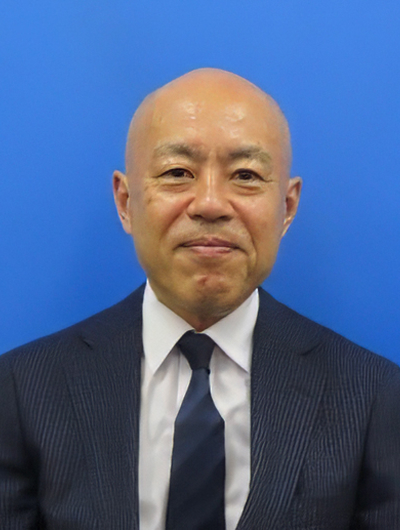
I am Kyosuke Nagata. I assumed the position of President of the Tsukuba Science City Network on 1st July 2026.
Tsukuba Science City was planned in the 1960s to alleviate overcrowding in Tokyo and to promote science and technology. Thanks to the Tsukuba Express, which began running 20 years ago, and other factors, access to central Tokyo has improved and this has been helping Tsukuba city’s population grow. Now, the city has the highest number of permanent residents of all the cities, towns and villages in Ibaraki Prefecture. Currently, the Science City is home to over 100 public and private research institutions, including 29 national or government-funded research and educational institutions. At these institutions, there are approximately 17,000 researchers actively working on their research, of which over 4,000 are foreign researchers.
Against this backdrop, in June 2004, the Tsukuba Science City Network was built by merging the Tsukuba Science City Liaison Council for Promotion of Research Exchange and the Tsukuba Science City Council. The Tsukuba Science City Network was founded with an aim to “allow its members to mutually and closely exchange diverse information and opinions and partner with each other in research and other issues by capitalizing on the global environment of Tsukuba Science City and setting a future vision, thereby attempting to build a truly resident-friendly, mature community.” Today, it is fulfilling a major role in such partnerships in Tsukuba.
In this unstable world, Japan has been faced with a number of issues, Domestic issues include a declining labour force caused by the falling birthrate and aging population, as well as sluggish economic growth, and globally, the issues are climate change and the resulting escalating disasters, and energy and resources and others. In order to resolve these issues, it is important to advance science and technology and to nurture human resources who can support these advancements. Against this backdrop, the Science, Technology and Innovation Basic Plan has been announced, and the importance of technology development and its implementation into society has been discussed. The introduction of physical AI and robotics will, for example, boost productivity and enable efficient use of the labour force in a labour shortage, which will pave the way to economic recovery. These technologies have been rapidly advancing around the world, and in order for our country to catch up, we need to drive related innovation through research and development efforts.
This requires the research institutions in Tsukuba Science City to generate a synergistic effect and work towards co-creation while fulfilling missions unique to individual institutions, to pave the way for the future. Working towards a sustainable and resilient society, we are determined to overcome the above-mentioned issues by enhancing research activities from basic to applied research and those that support social implementation in addition to promoting the development of human resources who will work on these research activities and social implementation. In addition, we will rephrase a part of our goal from ‘build a mature community’ to ‘build a community in which people can experience the advancements of science and technology’ and help develop Tsukuba Science City.
To promote activities of the Tsukuba Science City Network, I would appreciate your further understanding and assistance.